Stress can turn an ordinary afternoon into a cycle of tension, poor focus and another cup of coffee. Cortisol Daytime Tea from Loose Leaf Tea Market offers a different approach through a caffeine free herbal blend built around tulsi rooibos and lemon verbena. But feeling calmer and actually lowering cortisol are different outcomes.
This review looks at the formula available research and real experiences to see where this tea fits into everyday stress support.
Why People Are Turning To Cortisol Daytime Tea
Interest in cortisol-focused drinks makes sense when stress follows people from morning meetings into the evening. A warm drink also creates a natural pause in the day. For someone trying to reduce caffeine without giving up that familiar cup-in-hand experience, a herbal option can be especially appealing.
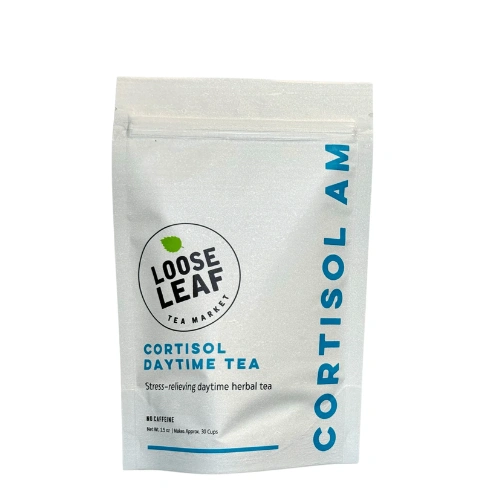
Loose Leaf Tea Market positions its daytime blend around stress support while keeping the formula caffeine-free. One bag makes about 30 cups and the recommended preparation uses one teaspoon in eight ounces of hot water steeped for seven to ten minutes. The light lemony profile can be served hot or iced.
What Makes Cortisol Daytime Tea Different From Regular Herbal Tea
The formula combines rooibos, tulsi, lemon verbena, lemongrass, calendula, rose petals, lavender, hibiscus, rosehip, elderberries and organic fruit flavor. According to Loose Leaf Tea Market, the ingredients are certified organic and the blend contains no caffeine.
That combo provides Cortisol Daytime Tea with two functions it can do. It’s a herbal alternative to another cup of caffeine, with botanicals generally associated with relaxation and stress relief.
How Tulsi Fits Into The Formula
Tulsi deserves the closest attention because research around this herb goes beyond traditional use. A randomized, placebo-controlled trial involving 100 adults experiencing stress evaluated a standardized tulsi extract over 8 weeks.
Participants taking the extract showed improvements in perceived stress and lower hair cortisol at week eight compared with placebo. That finding makes tulsi relevant when discussing Tea To Lower Cortisol but context matters. Researchers studied a standardized extract at a controlled dose.
What Rooibos And Lemon Verbena Add To The Blend
Rooibos provides a naturally caffeine-free base and has attracted some cortisol research of its own. One study found changes in cortisol to cortisone ratios after rooibos consumption although the findings do not establish Cortisol Daytime Tea itself as a treatment for elevated cortisol.
Lemon verbena contributes much of the fresh citrus character while having a history of use in relaxing herbal preparations. Research has examined concentrated lemon verbena preparations for areas including sleep and exercise recovery but those findings cannot automatically be transferred to this particular tea blend.
Why A Caffeine-Free Formula Matters During The Day
One surprisingly useful feature may have little to do with exotic ingredients. Cortisol Daytime Tea gives people a flavorful drink without adding another source of caffeine to an already stressful afternoon.
That point also appears in current Reddit discussions about herbs and cortisol, where some people describe cutting back caffeine as more noticeable for them than adding supplements. Others mention tulsi among herbs they personally use.
These are individual experiences rather than clinical evidence, but they highlight how the drink being replaced can matter alongside the drink being added.
What Research Can Tell Us About Tea For Cortisol Reduction
Research gives the ingredients some credibility but also sets clear limits. Tulsi has human evidence related to perceived stress and cortisol measures while rooibos has preliminary research involving cortisol metabolism. Those findings make the formula interesting enough to study rather than strong enough to guarantee a result.
What We Know About The Individual Herbal Ingredients
Tulsi currently provides the strongest stress-related evidence among the main ingredients. An earlier six week placebo controlled study also investigated a tulsi extract for general stress, while the later eight-week trial examined both subjective stress and objective cortisol measures.
This evidence supports reasonable interest in Tea For Cortisol Reduction while leaving an important gap. Extract studies use defined quantities and controlled conditions. Your cup contains several herbs steeped together and the product page does not provide the amount of each botanical per serving.
What We Cannot Assume About The Finished Blend
In this analysis, no scientific trials were found that examined the Cortisol Daytime Tea itself and verified that consuming a cup reduces cortisol by a certain amount. Independent investigation has also pointed out the lack of clinical evidence for the full blend's cortisol-lowering claims.
That distinction is easy to miss. Feeling relaxed after tea is still a worthwhile experience but it does not prove that a measurable hormonal change occurred. Someone concerned about medically abnormal cortisol levels needs appropriate testing and professional guidance rather than judging cortisol through mood alone.
How Long Someone Might Need Before Judging The Tea
Loose Leaf Tea Market says herbal products aimed at longer term concerns may require extended use before changes become noticeable. Research on standardized tulsi extracts has also evaluated outcomes over periods such as six and eight weeks rather than after a single serving.
That does not establish a required timeline for this tea. A more useful approach is to pay attention to practical changes such as afternoon tension, caffeine intake, sleep quality and how consistently you enjoy drinking it. Expecting a dramatic feeling after one cup sets a standard that current evidence does not support.
Who Should Consider Cortisol Daytime Tea Carefully
Loose Leaf Tea Market advises people who are pregnant, nursing, taking prescription medication living with a medical condition or receiving medical care to speak with a healthcare professional before using the blend. A pharmacist can also help identify potential herb and medication interactions.
FAQs
Can Cortisol Daytime Tea Actually Lower Cortisol?
Individual ingredients have promising research but the finished tea has not been clinically demonstrated to lower cortisol by a defined amount. Its strongest case is as a caffeine free herbal option that may complement an everyday stress routine.
Can You Drink Cortisol Daytime Tea Every Day?
Loose Leaf Tea Market presents the blend for regular use and recommends one teaspoon per eight ounce cup. Anyone taking medication or managing a health condition should check suitability with a healthcare professional first.
Does Cortisol Daytime Tea Contain Caffeine?
No. The formula is caffeine free which makes it practical for people who want a daytime herbal drink without adding another stimulant.
Cortisol Daytime Tea from Loose Leaf Tea Market has a credible ingredient story and encouraging experiences behind it, but current evidence does not support treating it as a proven cortisol treatment.
Its stronger value lies in providing a pleasant caffeine-free ritual built around herbs with emerging stress-related research. If that realistic role fits what you want from your daily cup, it may be worth considering.
Follow VirtualVaultCodes for more practical health insights, wellness guides, and product reviews.