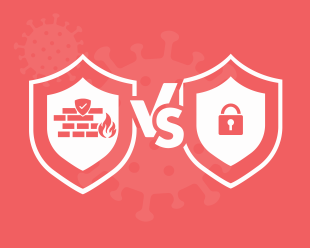
In today's digital world, protecting your devices and data is more critical than ever. Firewalls and antivirus software are two fundamental security measures.This often makes users wonder whether they should rely on firewall or antivirus for better security.
Understanding the antivirus vs firewall protection software is key to implementing a robust, multi-layered cybersecurity strategy.
Difference Between Antivirus and Firewall
Antivirus vs firewall different from each other in purpose, functionality, and other aspects. Choosing firewall or antivirus depends on understanding their core differences. These differences are as follows:
Purpose

Firewalls act as a first line of defence against suspicious incoming and outgoing traffic. It only permits network traffic to flow into your network that meets the predetermined security criteria.
As it blocks unwanted traffic, a firewall prevents unauthorized access and blocks hackers who steal your sensitive information.
On the contrary, antivirus software removes existing malware from your system. It keeps your devices protected from threats, viruses, and spyware that can steal your personal information. They scan files and programs for known threats and suspicious behaviours and neutralize them before they cause any damage to your sensitive information.
Functionality

Firewall monitors and manages incoming and outgoing network traffic. A firewall primarily functions by allowing or denying access to particular websites, services, and network ports. Another essential function of a firewall is that it divides the network into separate segments, preventing the spread of a virus from one segment to another.
Antivirus functions include scanning files for harmful applications, applying heuristic analysis to detect new threats, using databases, and providing real-time protection against malware and and using best cyber security software helps prevent cyber threats.
Implementation
Firewalls are positioned between your network and the internet gateway, preventing the infiltration of suspected websites and ensuring centralized network protection.
Firewall softwares are installed on servers or individual computers. They safeguard specific devices, offering greater flexibility but generally less overall protection compared to hardware firewalls.
Antivirus solutions work directly on the device where the threat may occur. They scan system files, apps, and downloads to detect, quarantine, or remove malware that has already reached the device
Scope of Protection
Firewalls act as a comprehensive shield against external threats and offer a high degree of protection for your devices. It monitors and analyzes all incoming and outgoing traffic, ensuring comprehensive security for your endpoint devices.
On the other hand, an antivirus protects at the drive level, which means its scope is not as broad as a firewall's. It helps keep your device and files free of malware and viruses, improving data performance at the specific level.
Protection Level
Firewalls primarily defend against external threats by controlling access to your network, serving as a barrier to keep unauthorized users out.
They function as preventive measures, aiming to block threats before they reach the network, and are particularly effective against external threats.
Antivirus software targets internal threats by detecting and eliminating malware that has already entered the system, including threats that bypassed the firewall or originated internally.
These tools serve both preventive and corrective roles, blocking potential infections and removing existing malware from the system.
This clarity helps users decide whether they need firewall or antivirus, or ideally both together.
FAQs
What is the Main Difference Between an Antivirus and a Firewall?
An antivirus scans for, detects, and removes malicious software already on your device. A firewall blocks unauthorized access and suspicious network traffic before threats reach your system.
Do I Need Both an Antivirus and a Firewall?
Yes. They protect against different kinds of threats. Using only one leaves gaps in security.
Can a Firewall Block Phishing Attacks?
Not effectively. Firewalls control traffic access, but phishing is a social engineering trick, including various types of phishing attack that bypass technical filters. Antivirus and browser protections help more in those cases.
Which One Should I Install First?
There’s no order requirement. Ideally, both should be active together for layered protection.
Many users get confused between firewall or antivirus, but both play different and essential roles. In summary, understanding the difference between firewall and antivirus software is crucial for effective cybersecurity.
While a firewall controls network access to block unauthorized intrusions, antivirus software focuses on detecting and removing malware that has already infiltrated your system.
To strengthen endpoint security, it is best to leverage other tools such as antivirus with password manager, antiphishing tools and services, top AI security tools, antimalware tools and antivirus with vpns to further strengthen the digital protection strategy.
Stay tuned to Virtual Codes Vault for more information!
